
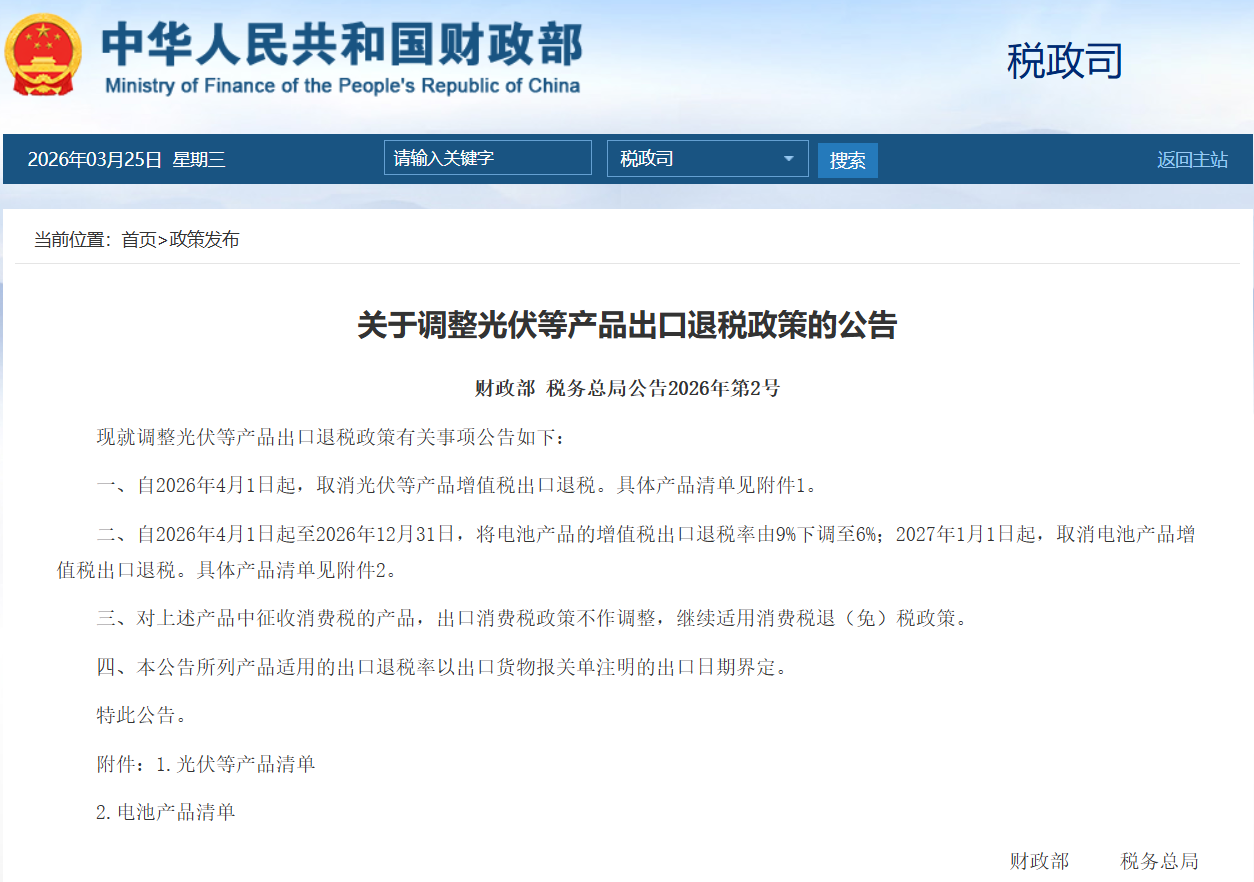
Recently, two major shifts have emerged in the global trade landscape: on one hand, South Africa has significantly raised anti-dumping tariffs on steel products from China; on the other, my country’s Ministry of Finance and State Taxation Administration have jointly issued new regulations, effective this April, to formally adjust export tax rebate policies for products such as photovoltaic equipment and batteries. The convergence of external barriers and domestic policies is rapidly reshaping the strategic logic behind the global expansion of Chinese manufacturing.
Major Adjustments to Export Tax Rebates for PV and Battery Products!
According to the latest announcement from the Ministry of Finance and the State Taxation Administration, effective April 1, 2026, my country will officially abolish VAT export tax rebates for products such as photovoltaics, while implementing a "transitional phase-out" for battery-related products.
Impact on Sellers and Recommendations
Export tax rebates have, to a certain extent, bolstered the price competitiveness of domestically produced PV products and batteries in overseas markets. As policies tighten, the industry is poised to gradually shift from being "price-driven" to being "technology- and brand-driven"—a transition likely to impact cross-border enterprises across their cost structures, supply chains, and pricing strategies.
Sellers are advised to proactively assess potential cost fluctuations and optimize their product portfolios and pricing strategies to mitigate the impact of narrowing profit margins.
South Africa "Steps Up" Measures Against Chinese Steel
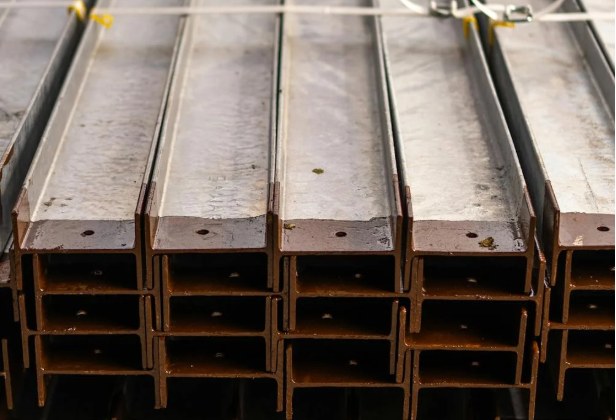
Recently, the International Trade Administration Commission of South Africa issued a new ruling imposing an anti-dumping duty of 74.98% on U-beams, I-beams, H-beams, as well as other structural steel products of various angles, shapes, and cross-sections originating from or imported from China; the anti-dumping duty rate applicable to Thailand was set at 20.32%.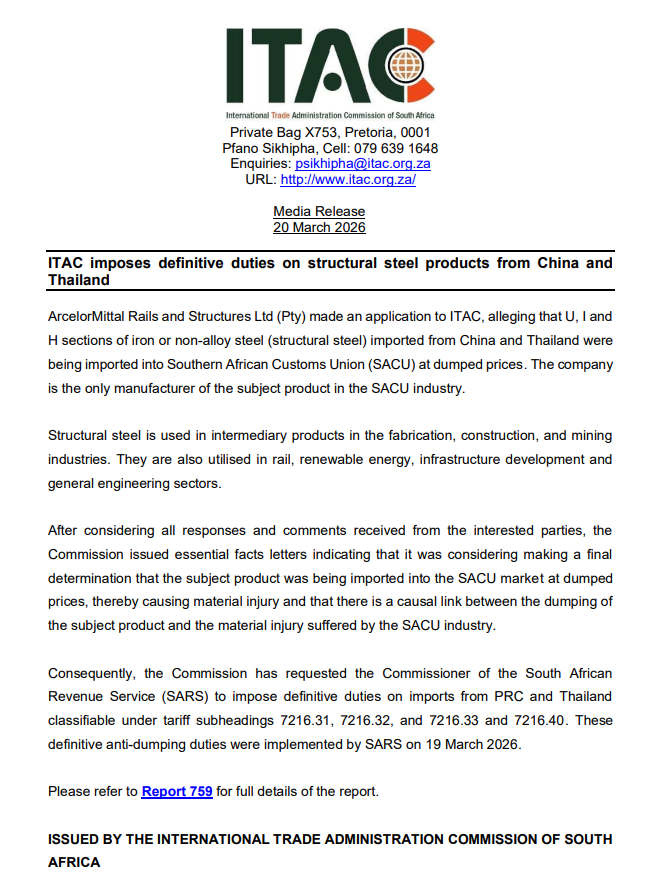
This tariff rate represents a further escalation from the provisional 52.81% duty imposed on China in 2024; it implies that the cost of Chinese steel entering the South African market has been driven up by nearly 75%, thereby significantly eroding its price competitiveness.
More critically, this policy is not confined to South Africa alone. As a member of the Southern African Customs Union (SACU), South Africa’s tariff will be applied concurrently to fellow member states—including Botswana, Namibia, Lesotho, and Swaziland—rapidly expanding its scope of impact across the entire Southern African market. What began as a shift within a single market is now evolving into a regional trade barrier.
The Root Causes Behind the Current Ruling
From a deeper perspective, the recent tariff hike is not an isolated incident but rather the result of prolonged pressure on South Africa's domestic steel industry. Chinese steel products once accounted for 73% of South Africa's total steel imports; against the backdrop of sluggish domestic demand, this influx of low-priced imports has inflicted a sustained shock upon local enterprises.Consequently, some local steel manufacturers in South Africa have already resorted to production cuts—and in some cases, even temporary shutdowns. Raising import costs to safeguard domestic industries and stabilize market prices has thus emerged as the inevitable policy choice. This also implies that similar anti-dumping measures may continue to surface in an increasing number of markets in the future.
Under Pressure, Foreign Trade Enterprises Enter a New Phase
When we examine two key factors in tandem, a clearer trend emerges:
1、External Environment
Tariff barriers are rising; anti-dumping measures may well become the norm in the future.
2、Domestic Policy
Amidst policy adjustments, export tax rebates are being gradually phased out.
3、Competitive Logic
The traditional model of low-price competition is gradually shifting toward a focus on technology, branding, and localization.
This represents a "synchronized internal and external" structural adjustment; in this new environment, enterprises must fundamentally restructure their competitive strategies.
First is product-level upgrading: shifting away from traditional low value-added goods toward high-end materials—such as those characterized by high strength, corrosion resistance, and eco-friendly, low-carbon properties. These products entail higher technological barriers and are relatively less susceptible to the impact of anti-dumping measures.
Second is the adjustment of market structure. The risks associated with over-reliance on a single market are intensifying. Expanding into emerging markets—such as the Middle East and Latin America—while simultaneously advancing localized production and sales operations will become a crucial pathway for circumventing trade barriers.
Third is the enhancement of compliance capabilities. From rules of origin and responding to anti-dumping investigations to customs clearance and tax compliance, future competition in foreign trade will increasingly hinge on an enterprise's ability to understand and apply regulatory frameworks. Compliance is no longer merely an optional add-on; it has become the fundamental threshold for market entry.
In Conclusion
Whether it is South Africa’s anti-dumping tariffs—reaching as high as 74.98%—or my country’s gradual phasing out of export tax rebates, these changes all point in the same direction: Chinese exports are moving beyond a stage of development that relies on low prices and policy-driven incentives.
Concurrently, the scope of South Africa's restrictions is expanding, extending from structural steel to various other categories—such as hot-rolled flat steel—and demonstrating a clear trend of evolution from "targeted strikes" toward "whole-chain restrictions."
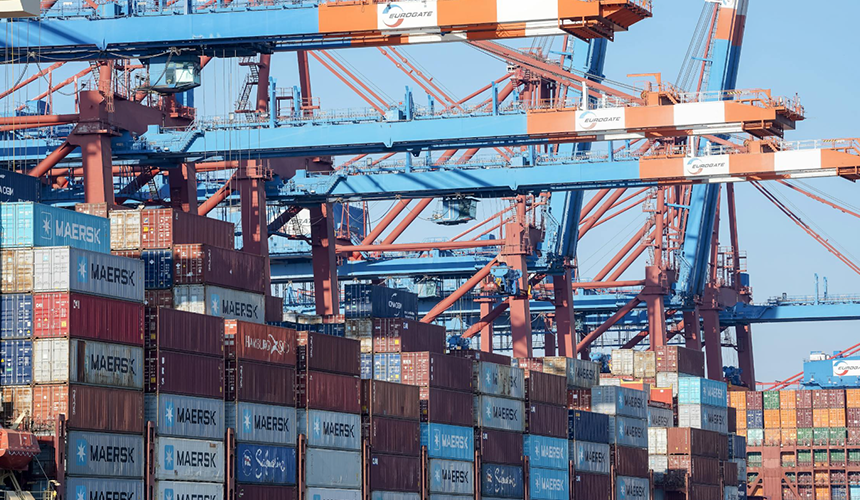
In the short term, rising costs and squeezed profit margins are unavoidable; however, from a long-term perspective, this also represents a restructuring of the industry's landscape. The enterprises poised for sustainable growth in the future will no longer be those offering the lowest prices, but rather those possessing technological capabilities, brand equity, and the capacity for global strategic deployment.
In this new trade cycle, the true competition has only just begun.